
What is Mindful Leadership?

Your nervous system is contagious…
Have you ever noticed the change in the energy of a group when someone bursts into a room in a state of high stress, overwhelm, or anxiety? The air bristles with electricity. Maybe you get that twist in the pit of your stomach. People shift in their seats, your heart rate increases, your body stiffens, and your pupils dilate. Seems everyone is suddenly on guard, bracing, and tense.
Or maybe you’ve noticed the feeling of relief when you are approached by someone who is regulated, grounded, and steady. Your jaw and your chest soften. Your shoulders relax. Your breath deepens. Their presence feels calming, comfortable, safe.
Our nervous systems are contagious, and our emotional states are always giving and receiving information from each other. This phenomenon is called co-regulation.
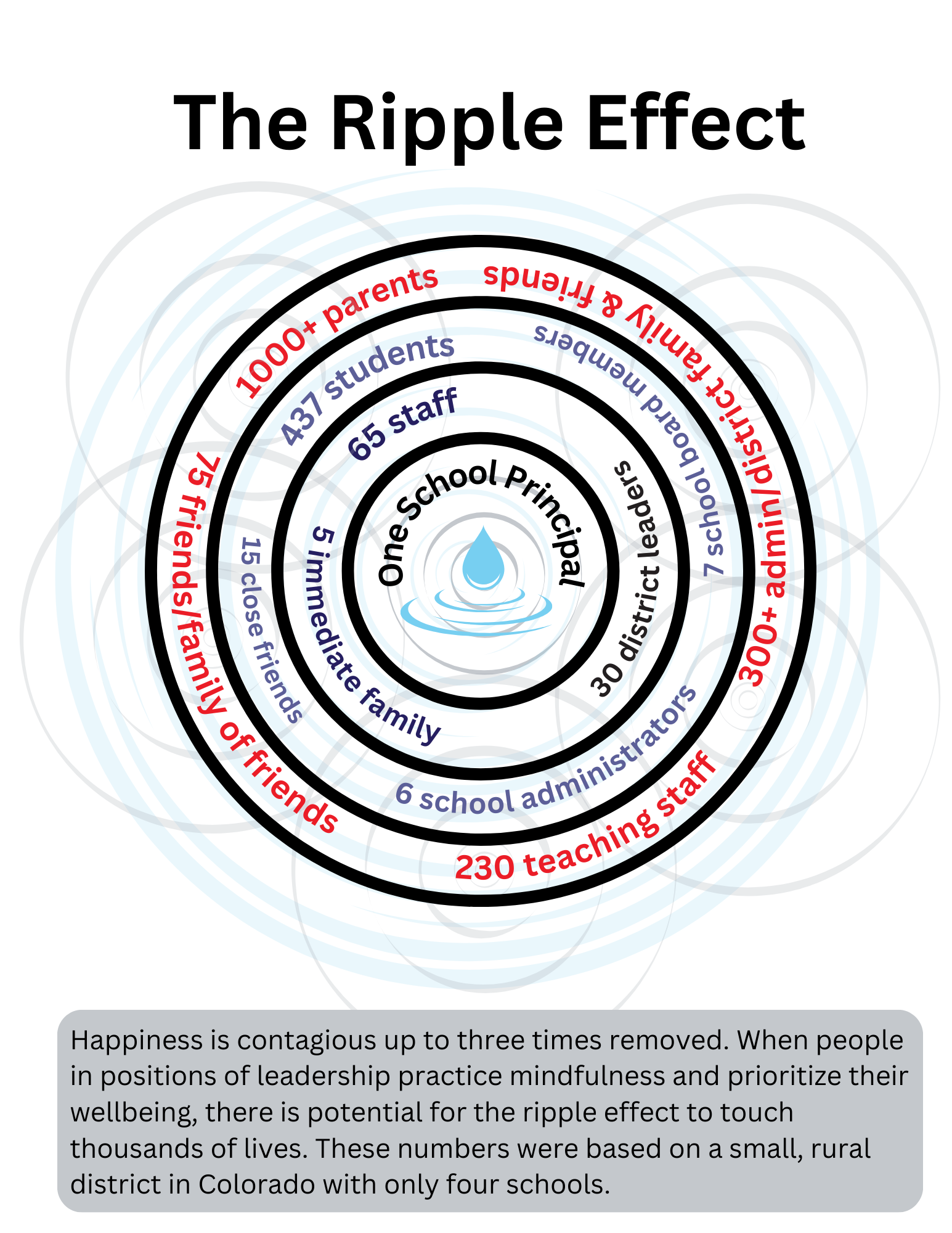
Both our positive and negative moods can spread in a ripple effect through our communities, though research has shown that positive moods ripple outward more easily than negative ones. The more regulated we are, the more we can be a source of regulation for others.
For example, if we are under-rested, snippy, irritable, or anxious, the chances are higher that others may pick up on our moods and respond with defensiveness, tension, avoidance, or conflict. When leaders neglect their own wellbeing, the impact echoes across entire systems. And when leaders resource themselves, regulate their emotions, and prioritize their own nervous system health, that too becomes contagious—creating ripples of collective healing.
Mindful Leadership is Heart Work
No matter the sector, the emotional state of a leader sets the tone for the whole environment. When leaders tend to their own nervous systems, acknowledge their humanity, and model healthy coping, those around them are given permission to do the same.
The ripple effect of our wellbeing is measurable. A Harvard study describes happiness as contagious up to three degrees removed. This means that a single leader’s nervous system can influence hundreds or thousands of lives. One steady regulated leader is a community asset.
You are the work.
Transforming your relationship to stress can change your life and the lives of everyone in your circle of care, but it takes engaged effort and sustained practice over time. Learning basic mindfulness practices can give you a foundation for stabilizing your attention in the present moment and staying regulated during moments of difficulty or upheaval.
Many of you in caregiving, family, or organizational leadership roles may find that you are frequently in contact with people experiencing immense challenges or severe traumatic stress. Because of how contagious our nervous systems are to each other, it is critical to not only develop skills for managing your own arousal, but also to have the capacity to keep yourself regulated amid the collective trauma and dysregulation that surrounds you.
Across education, healthcare, nonprofits, business, and public service, leaders face immense pressure. Depression, addiction, chronic stress, interpersonal violence, and collective grief are woven into daily life. In these conditions, leadership becomes a living invitation.
A leader who sets the intention to slow down, pay attention to the present moment, and speak up for wellbeing begins a chain reaction that can reach colleagues, staff, clients, students, families, and peers. Collective healing begins inside each of us. When leaders give themselves the gift of attention, they create ripples of steadiness in the systems around them.
I’m so short on time. How can I incorporate mindfulness training into my workday?
Mindful leadership is not a box to check or another credential to add to your resume. It is not one more thing to “do” each day, but rather a way of “being” in relationship with yourself and with the world. It is an invitation to create new habits of pausing, slowing down, getting curious, paying attention, honoring your body’s wisdom, and meeting what arises with compassion.

The practical skills and guided practices offered in my book, Fierce Boundaries, can offer a starting point for integrating personal practice into workplace, family, and community culture.
Once you start doing these practices for yourself, you’re likely to naturally find ways to bring them into your interactions with others. Meetings can begin with a bell and a breath, agendas can include check-ins and collaborative feedback, you can be the conductor of attention when you notice that focus is scattered, and transitions can be facilitated to include movement and agency.
Leaders who offer their nervous systems as the intervention help rewrite the story inside their organizations—a story where wellbeing sits at the heart of culture, where connection guides decision-making, and where communities experience the ripples they most need: steadiness, clarity, and love.
These times call for mindful, trauma-informed leaders who are willing to place wellbeing at the center, welcome their own experience with curiosity and care, and embody the skills and attitudes they hope to cultivate in the larger system.
Mindful leadership means leading by example through presence, non-judgment, prioritizing wellbeing, co-regulation, and knowing that your nervous system is the intervention. You are the work.
Note: When working with trauma-impacted populations or with your own trauma history, it can be incredibly supportive to work with a coach or mentor trained in mindfulness-based interventions (MBIs). I invite you to schedule a 1-1 session or welcome call with me to or to join the waitlist for the next Mindful Leaders Mentorship Cohort.
