You Know Your Clients Need Better Boundaries
But How Do You Actually Teach Them?
As therapists, we talk about boundaries all the time. We help clients recognize when they are overextended, encourage them to communicate their needs, and remind them that they are allowed to say no.
Yet knowing you need a boundary and knowing how to actually set one are two very different things.
A client can understand perfectly well that a relationship is draining them and still answer the phone. They can recognize their tendency to over give and still say yes before they have checked their capacity. They can rehearse the perfect boundary statement in therapy and find themselves explaining, appeasing, defending, or shutting down when the actual moment arrives.
Because boundary setting is about more than using a canned script or saying the right words.
What’s in the Clinician’s Guide:
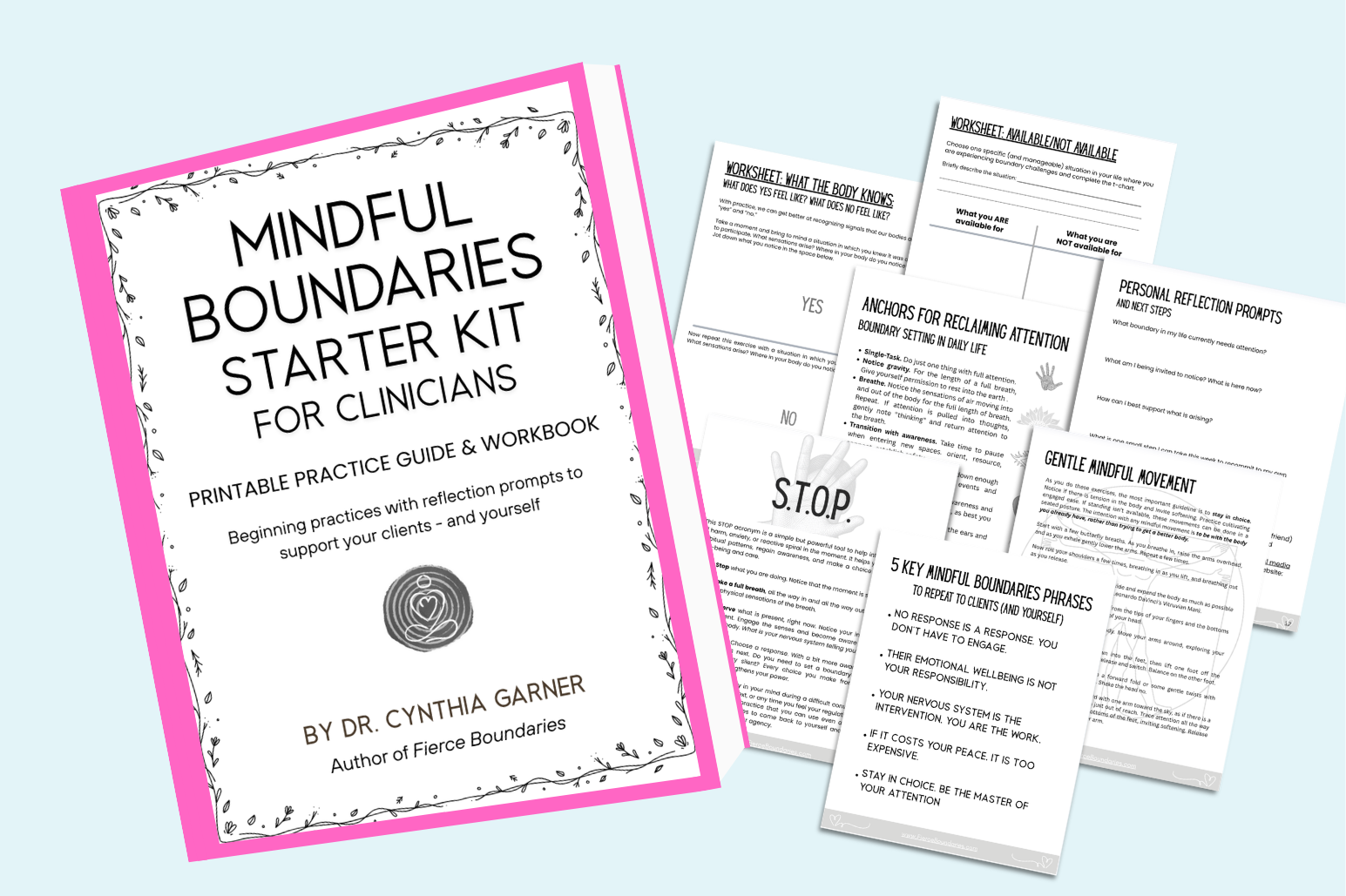
Three core lessons from the Mindful Boundaries framework
A printable S.T.O.P. poster
Worksheets for clarifying boundaries
Guided mindful movement practices
A printable menu of anchors for stabilizing attention
Five key Mindful Boundaries phrases to return to with clients—and yourself.
Reflection prompts and next steps for bringing these practices more fully into your life and work.
An exclusive discount code for the Mindful Boundaries Foundations course!

In the process of writing Fierce Boundaries, I discovered that boundary setting is an attentional practice.
When we are stressed or activated, attention can be hijacked by habitual thoughts or another person’s behavior, needs, emotions, or reactivity. We can easily spiral into thinking about what happened in the past, or into anxiety about what could happen in the future, what we need to do to keep the peace, how to make everything okay.
Mindful Boundary work begins by helping clients learn to reclaim their attention and get curious.
Where is my energy going?
What harmful cycles am I participating in?
How has my mental real estate been hijacked?
How am I holding my body right now?
What does it mean to ask for what I need?
What am I available for?
Where am I in choice?
These questions invite clients to embody presence and rebuild a relationship with themselves. Over time, they can learn to recognize the physical and emotional signals that tell them when something needs attention, clarify their own capacity, and create enough space between stimulus and response to make a more intentional choice.
For therapists, there is another layer to the practice of boundary setting. We spend our days giving our attention to other people. We know that mindfulness can help us notice when our own nervous system has become overwhelmed, taxed, and exhausted, but many of us don’t set aside the time for formal practice.
We are susceptible to over-giving, burnout, depleting ourselves, and succumbing to compassion fatigue. These same practices we offer to our clients are actually the ones we most need for ourselves too. Setting healthy boundaries allows us to sustain the good work we do, and continue to be a healing and grounding presence for others.
This is the heart of the work I explore in Fierce Boundaries: boundary setting as an ongoing practice of coming home to ourselves, reclaiming our attention, and choosing how we want to relate to what is arising.
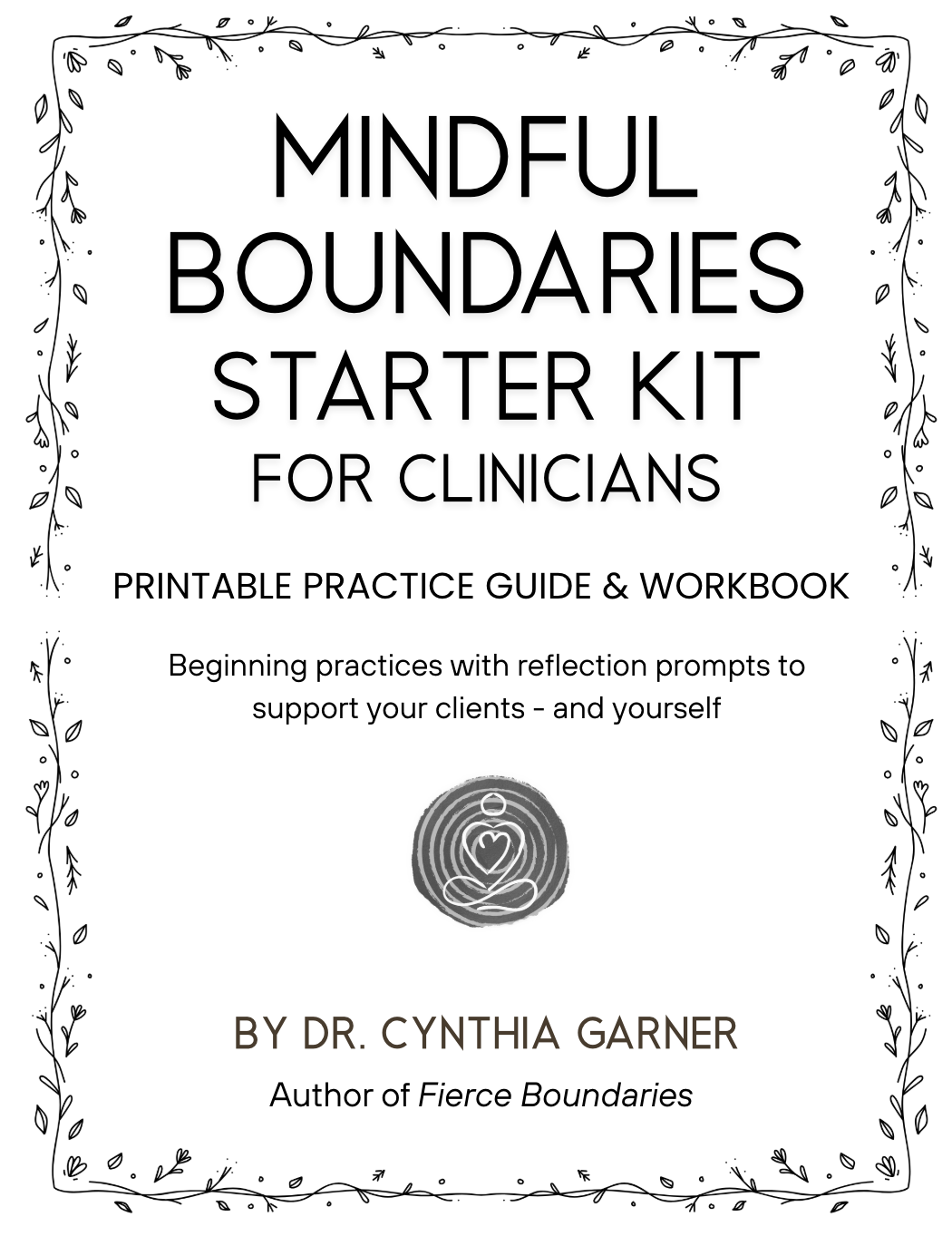
I created the free Mindful Boundaries Starter Kit for Clinicians to give therapists a simple place to begin bringing this approach into the therapy room. It includes printable practices and reflection tools you can use with your clients, and yourself.